

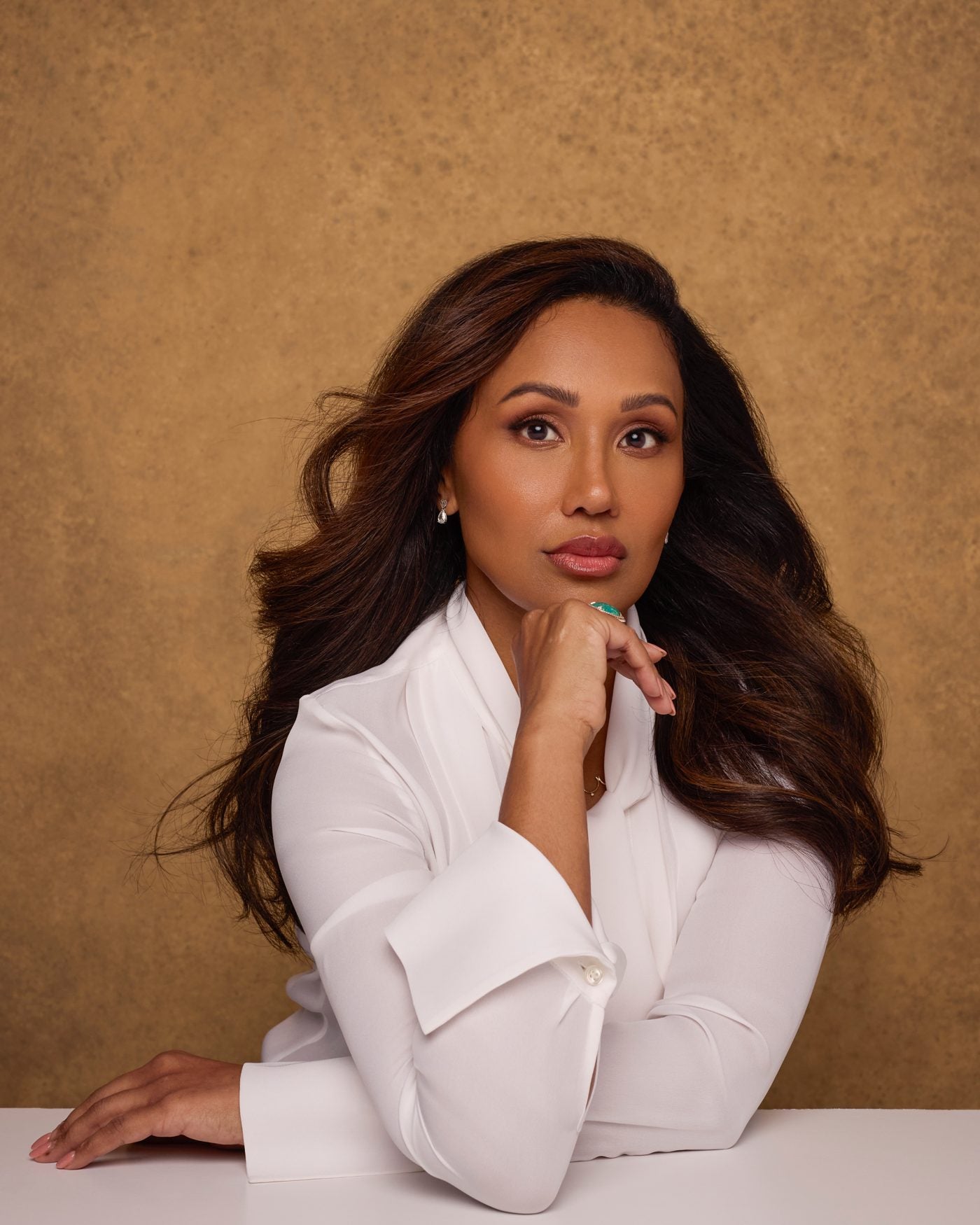











Where it began
I was born in the US, a first-generation Indian-American and spent my childhood summers in Chennai, India, in a house with my grandmother’s pediatric clinic attached to it. I was allowed to sit in while she saw patients.
What stayed with me was that she never stopped at the medicine. She went beyond it, and that is where I understood the importance of being empathetic toward everyone who walks in: that treatment begins with listening to what anyone who comes through those doors has to say.
I would also shadow my father, my uncle and my aunt, so medicine was something I was exposed to from a very young age, in a family of about fifty doctors. From a very young age, I knew I wanted to be a doctor. I just wasn’t sure of the specialty.
I was also creative, and for me the ideal scenario was to marry my creative side and my scientific medical side. I knew I belonged in surgery, because that meant I would get to use my hands, so the creative aspect was naturally checked. During my third-year medical school rotation I had to choose an elective surgical specialty, and was drawn to both orthopedics and plastic surgery.
I fell in love with plastic surgery. Every day was so different. I had the opportunity to design and be creative but also build long-term relationships with my patients, something not often found in surgery.
Why jewelry?
I have always relished creative outlets. Long ago in college I took a jewelry class, along with art classes and costume design, so this is in a way a return to that.
This venture started out as a way to express myself in two very notable aspects of my life: someone who is a surgeon and someone who loves fashion.
What settled the form was an operating room photoshoot, where I held a scalpel as part of the pose. When I saw the picture afterward, and how beautiful the scalpel looked, it clicked. I had always loved the history behind these instruments. Each one was designed by a real-life surgeon, and many still carry their names. The beauty of these surgical instruments was not lost on me and the idea of celebrating that and at the same time making it something elegant and wearable all at once made everything click. Anyone seeing the designs would love the look but a woman or man in medicine would instantly feel the deeper connection.
My first thoughts were that doctors, aspiring medical students, nurses or their family members would want to wear them: a reminder and a celebration of the countless hours and sleepless nights that go into becoming a doctor, a nurse, a first responder.
My thinking changed when one of my patients asked if she could purchase one to hold onto a memory of what she had been through, something to look at and smile about years later. That is when it hit me that this goes beyond those of us who work in medicine and their families. Whether people come to us for elective reasons or life-saving medical situations there is a story behind the individual. I want everyone to be able to wear something that reminds them of what they have overcome, who they are or what they have achieved.
The story is theirs, whether to tell or not is their choice.
More in the Journal: Why a plastic surgeon is a natural fit for jewelry design, and the surgical instruments behind the jewelry.
The people behind the stories
The pieces already carry stories of my own.
The Kiran · Precision
Named after my daughter. She asks to come with me when I go to see patients, and she watches everything. I recognize the curiosity. Whether it turns into her calling is hers to find out.
The Priya · Restoration
Named after my younger sister. She is the person who taught me what it looks like when someone finally feels at home in their own body. That is what I am doing in the operating room most days, whether or not anyone calls it that.
The Erin · Strength
Named after my physician’s assistant, who is an anchor in my surgical practice. Like the instrument that inspired its form, her secure, steady presence holds countless pieces together, and she makes everything around her work.
The Ammama · Healing and Heritage
Named after my maternal grandmother, the first doctor I ever watched. She was one of the first to inspire me to become a physician. The caduceus is the oldest sign of medicine there is, so I reimagined the serpent and draped it on black beads, the way we do at home. Bringing together Indian heritage and a life devoted to medicine, The Ammama is a tribute to where we come from, those who shape who we become, and the calling to heal.
The Choti · Sight
Named after my beloved Choti Auntie. An ophthalmologist, a fellow lover of jewelry, and a physician who has dedicated her career to helping others see the world more clearly. This one is for her, and for everyone who spends a life protecting and restoring sight.
The Ethan · Connection
Named after my husband. He is one of the most curious people I know. He keeps me asking questions, chasing what comes next, refusing to settle for what is already known. The neuron felt right. Every idea any of us has ever had began as a signal crossing from one cell to the next, and the diamonds are set exactly where that crossing happens.
The Chandra · Creation
Named after my mother, Chandra. Here the uterus is reimagined as a symbol of creation, strength, and the remarkable complexity of the female body. I think of this piece as the beginning of everything: for motherhood, for creation, and for the women from whom our own stories begin.
The Sushruta
Named after Sushruta, the ancient Indian physician and surgeon regarded as the father of both surgery and plastic surgery. His writings described sophisticated surgical instruments and techniques, including early methods of nasal reconstruction. The Sushruta brings together surgical innovation and Indian heritage in a tribute to the origins of the craft, and to those who continue to advance it.
The Candace
Named after Candace. The silhouette came from her. So did the idea behind it: that confidence is at its best when it is generous, when someone is sure enough of themselves to make room for everyone else.
The Lyla
Named after Lyla, whose beautiful lips inspired its form. The lips represent more than beauty. They are how we speak, advocate, laugh, challenge, and make ourselves heard. This piece stands for expression, individuality, and the confidence to use your voice.
The Surya
Named after my older brother, Surya, a pediatric oncologist who is compassionate and listens carefully. The stethoscope is the first recognizable symbol of a doctor. At its heart, though, it represents something even more fundamental: listening. It is a reminder that before we can care, diagnose or heal, we must first listen.
Where part of this goes
Five percent of every sale goes to one of the two organizations whose work is close to my heart.
Shanti Bhavan Children’s Project
Gives children from India’s poorest communities an education, a home, healthcare and mentorship, from their first school years to their first job. shantibhavanchildren.org
Noonday Collection
Partners with artisans around the world, most of them women, to create fair-paying, dignified work. noondaycollection.com
Dr. Rednam’s surgical practice, her writing and her podcast are at vinayarednam.com.
Questions about the House and its jewelry are answered on the FAQ.


